
VW Unveils Tukan and Officially Launches Its Pick-Up Offensive in the Region
- A first look: The all-new Tukan pick-up makes its debut, marking the first major step in Volkswagen’s pick-up offensive in Brazil and South America.
- Design and functionality: Both elements were developed together throughout the design process and are part of Tukan’s DNA.
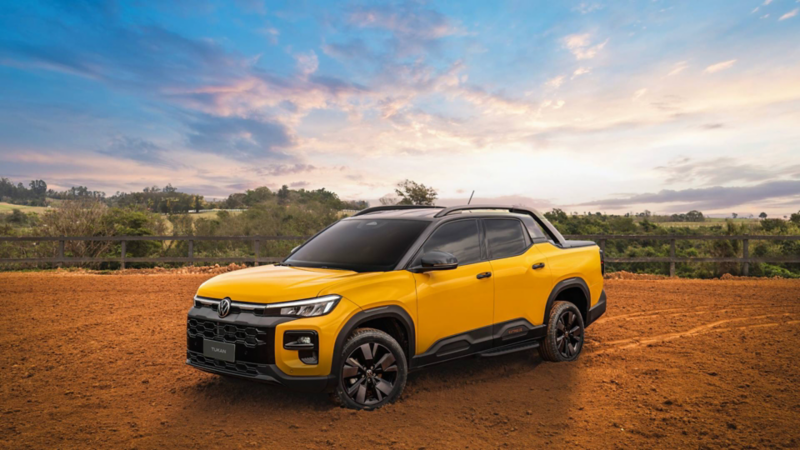
- Double-cab version: The Tukan double cab is presented in the top-of-the-range Extreme trim, featuring the iconic Canary Yellow launch color, full of personality.
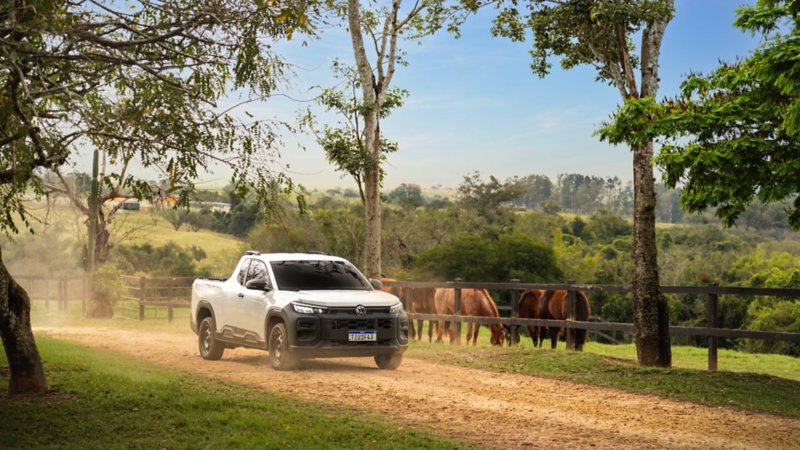
- Single-cab version: The Tukan single cab makes its first appearance in the entry-level Robust trim, designed for work, practicality, and professional use.
- MQB platform: As Volkswagen’s first pick-up built on the MQB platform, Tukan features a specially developed rear leaf-spring suspension from the entry-level version, combining comfort, durability, load capacity, and Volkswagen’s signature driving experience.
- Developed in South America: Fully designed, developed, and produced in the region, Tukan has already completed more than 2 million kilometers of testing, including first-of-its-kind customer evaluations under real-world driving conditions.
Barretos (São Paulo, Brazil), August 21, 2026 – A new chapter begins in the history of Volkswagen pick-ups. The brand officially launches its pick-up offensive in Brazil and South America with the full reveal of the exterior design of the all-new Tukan. The debut takes place during the traditional Festa do Peão de Boiadeiro de Barretos, Brazil’s largest country culture and rodeo event, held in Barretos, a city in the interior of São Paulo state with strong connections to the country’s agricultural sector. In its 32nd participation in the event, Volkswagen takes the first major step in a strategy that places South America at the center of the development of its new generation of pick-ups.
Tukan arrives in Barretos in two configurations, offering an early look at the versatility of the new model family. The main highlight is the single-cab configuration, making its debut in the entry-level Robust trim. This version expands Tukan’s capabilities as a work vehicle, focusing on practicality and professional applications.
The double-cab version, previously revealed with camouflage, is now presented in the top-of-the-range Extreme trim, featuring the Canary Yellow launch color. This iconic color has been part of the new Volkswagen pick-up since the early stages of development and its first communications. Choosing this color for the official reveal highlights one of the project's key characteristics: Tukan's distinctive personality.
One model family, two cab configurations, and clear purposes built around the essential qualities of a pick-up. Tukan offers durability, functionality, protection, and versatility to meet the needs of different customers.
The debut of Tukan and the launch of Volkswagen’s pick-up offensive are part of the brand’s strategy to introduce 21 new models in South America by 2028, supported by an investment of US$3.7 billion in the region.
Produced in São José dos Pinhais (Paraná, Brazil), the new pick-up is scheduled to officially launch in the market during the first half of 2027.
Functionality and Identity From the First Sketch
Functionality has always been an essential part of pick-up design. With Tukan, it also helped shape the vehicle’s appearance from the very first sketches. The evolution of Volkswagen pick-ups helps explain this approach.
“In the first generations of vehicles derived from passenger cars, it was natural for much of their visual identity to come from the original model. Saveiro, for example, has always been very similar to the Gol, the model on which it was based,” explains José Carlos Pavone, Head of Design at Volkswagen for the Americas.
Tukan also uses a familiar Volkswagen vehicle architecture. However, one of the main objectives of the Design Team was to ensure that the new pick-up would not simply copy the appearance of the T‑Cross, the vehicle on which its technical architecture is based.
The front of Tukan reflects some of the most important design decisions. The higher-positioned headlights, featuring LED technology from the entry-level version, give Tukan a taller appearance and provide a lighting position and visual presence better suited to a pick-up.
The result is a front end with its own distinctive identity. Black design elements and air intakes in the front bumper complete the look, creating a sense of protection around the front of the vehicle while emphasizing strength, durability, and resistance.
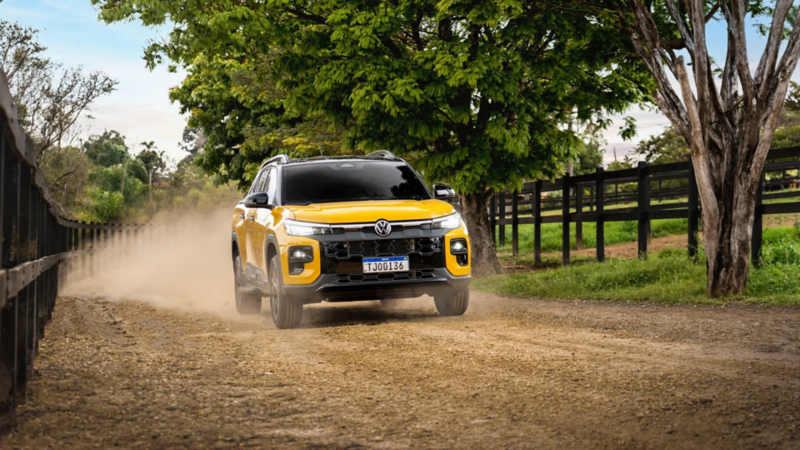
Along the sides, the Design Team worked with three visual layers: the bodywork, the window area, and a more prominent protective lower section.
Four lines meet toward the center of the pick-up, creating an X-shaped design concept. The protective elements have a more three-dimensional appearance, reinforcing Tukan’s robust character.
The more angular wheel arches and higher beltline also contribute to the stance and distinctive identity of the new Volkswagen pick-up.
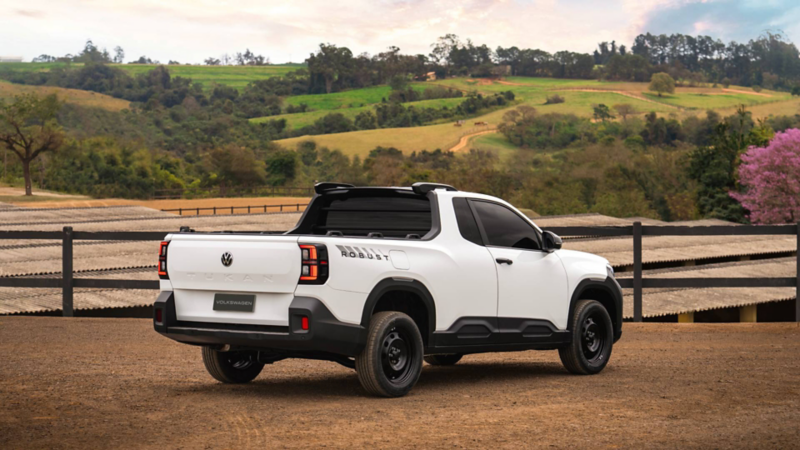
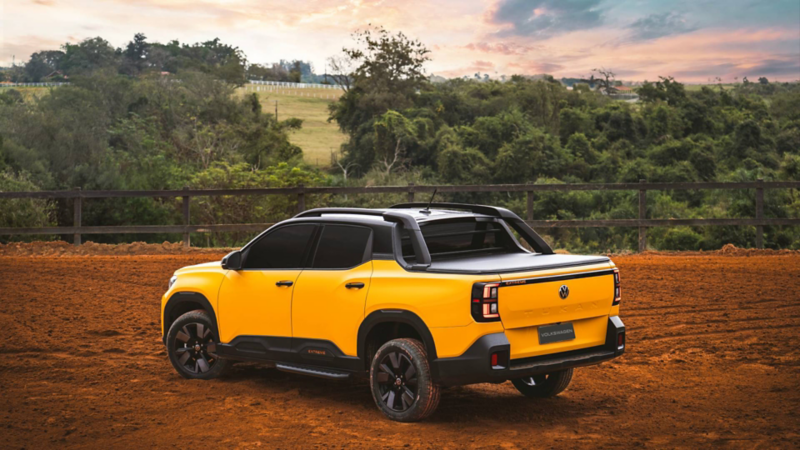
At the rear, the LED lighting signature, bumper, and design elements were developed as part of one complete visual concept. Together, they frame the tailgate and reinforce the same sense of protection found at the front.
“The design work carried out on Tukan reflects an idea that guided the entire project: creativity did not simply mean adding elements to the original vehicle. At different stages, especially with the Tukan single cab, it also meant understanding what each configuration really needed, or did not need, to fulfill its purpose,” explains JC Pavone.
Form and Function: Two Cabins, Two Purposes
One of the biggest challenges for the Design Team was developing two Tukan configurations with different purposes using the same platform, while maintaining a clearly recognizable identity across both versions.
“Form and function were developed together from the beginning of the Tukan project. Each configuration reflects this relationship according to its specific objectives,” explains JC Pavone.
In the double-cab version, form and function come together in a vehicle that combines the practicality of a pick-up with design, technology, comfort, and versatility for different everyday needs.
In the single-cab version, the biggest surprise of the Tukan family revealed in Barretos, functionality takes an even more important role.
A shorter cabin and longer cargo bed clearly highlight its work-focused design, while purely decorative elements have been replaced by practical solutions for everyday use.
The main focus of this configuration is functionality, practicality, and professional applications.
Listening to Those Who Really Use a Pick-Up
Volkswagen went beyond designing a new pick-up by listening directly to customers who use these vehicles as part of their daily routines.
Customer participation in research sessions and evaluations during development helped guide decisions related to Product, Design, and Engineering.
“A clear example of this customer-focused approach can be seen at the rear of the Tukan single cab. This configuration does not include the black design element connecting the taillights found on the double-cab version. During customer evaluations, participants showed a preference for a simpler solution with fewer decorative components, making everyday use and maintenance easier,” explains JC Pavone.
The same approach can be seen in one of the most important features of any pick-up: the cargo bed.
Designed from the beginning to support different types of use, the cargo bed will play an important role in Tukan’s versatility. Its dimensions were developed to maximize usable cargo space for a variety of applications.
To further expand this versatility, Tukan will be supported by a wide range of accessories and solutions developed for different customer needs.
Although more details will be revealed in the future, Volkswagen do Brasil has already shared its ambition: to make Tukan a benchmark in the segment for customization, adaptability, and integrated solutions.
This will allow customers to configure their pick-up according to their business needs and lifestyle.
The MQB Platform in a Pick-Up
ukan’s functionality goes beyond its exterior design.
For the first time worldwide, Volkswagen has adapted its well-known MQB platform for use in a pick-up.
To meet the specific requirements of a vehicle designed for both cargo transportation and work, the platform received specially developed solutions for the new model.
One of the most important developments is found at the rear.
Tukan features a specially developed leaf-spring rear suspension, designed to combine load capacity and durability without compromising comfort, stability, or Volkswagen’s signature driving experience.
The suspension system was engineered to handle uneven road surfaces while maintaining vehicle stability and driving comfort under different conditions, whether carrying cargo or driving without a load.
This combines the essential capabilities of a pick-up with the driving experience customers expect from Volkswagen.
Another important development was the increase in wheelbase compared to the vehicle on which the platform is based.
The longer wheelbase made it possible to accommodate Tukan’s cargo bed while maintaining passenger space and comfort, creating balanced proportions between the cabin and cargo area.
Additional practical features further improve everyday functionality, including an integrated toolbox and a cargo bed designed to accommodate pallets of different sizes.
“The result is a vehicle that can easily adapt to the needs of different industries, offering greater practicality, efficiency, and better use of its load capacity,” says Ricardo Plöger, Vice President of Product Development at Volkswagen for South America.
More Than 2 Million Kilometers of Testing Before Hitting the Roads
Even before its official market launch, the Tukan platform has already completed more than 2 million kilometers of testing.
The development program also includes a first-of-its-kind initiative for Volkswagen do Brasil: customers are participating in real-world evaluations of a pick-up, allowing the vehicle to be tested by people who regularly use this type of vehicle in their daily activities.
“Beyond evaluating Tukan’s behavior in controlled environments, the purpose of these tests was to expose the vehicle to different real-world working and driving conditions and listen directly to those who understand the practical demands of a pick-up,” adds Ricardo Plöger.
Customer feedback has already resulted in important product improvements.
For example, following tests in environments with high levels of dust, Tukan received improvements to its air intake system.
The system was refined to provide greater engine protection, helping improve component durability and maintain performance even under demanding working conditions.
The climate control system was also improved based on customer feedback.
The updated air conditioning system was designed to provide greater cooling capacity during high temperatures, ensuring better passenger comfort even in challenging weather conditions.
These examples demonstrate the approach that guided the entire development of Tukan: placing real customer needs at the center of every decision and turning insights gained from real-world testing into practical product solutions.